Root Canal Treatment —
Save Your Tooth, Stop the Pain
We treat the cause of the pain and keep your natural tooth whenever possible, with modern endodontic technology at Lina Dental Clinic.
EMERGENCY APPOINTMENTSpecialized Services
Comprehensive solutions for root canal and gum issues at Lina Dental Clinic
Endodontic Treatment
Specialized root canal therapy, treating acute and chronic pulpitis, and retreatment of failed root canals.
- Single root canal
- Root canal retreatment
- Apical surgery
Periodontal Treatment
Treatment of gum and jawbone diseases, preventing tooth loss from periodontal disease.
- Ultrasonic scaling
- Gum disease treatment
- Periodontal surgery
Prevention & Care
Regular care and preventive advice to maintain long-term oral health.
- 6-month checkups
- Regular tartar removal
- Oral hygiene advice
What is Endodontics?
Inside every tooth is a soft tissue called the pulp, which contains nerves and blood vessels. When decay or trauma reaches the pulp, it becomes infected — causing persistent pain, swelling, or an abscess. Root canal treatment removes the infected tissue, disinfects the canals, and seals the tooth to prevent further damage. The goal is straightforward: save the tooth and eliminate the infection.
When is treatment needed?
- Deep tooth decay reaching the pulp
- Dental trauma causing pulp damage
- Failed previous root canal treatment
- Apical abscess from pulp infection
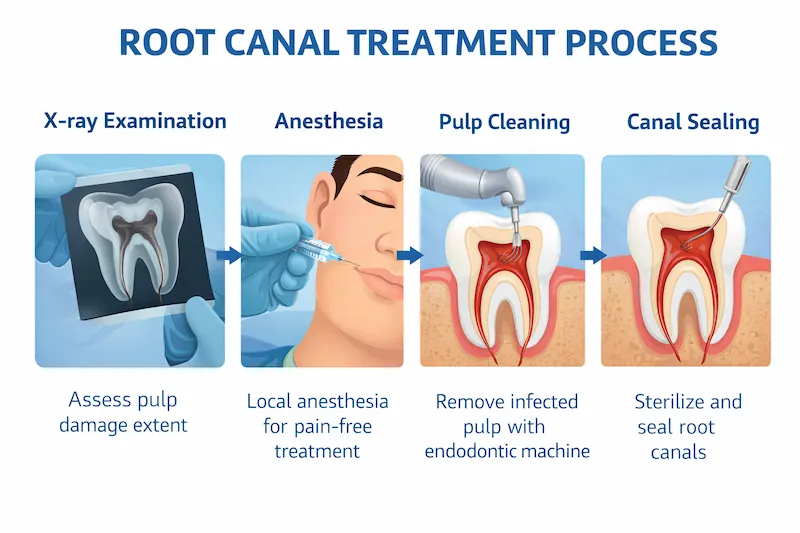
Treatment Process
X-ray Assessment
Evaluate the extent of infection and canal anatomy.
Local Anesthesia
The tooth is fully numbed for a comfortable procedure.
Pulp Removal & Canal Shaping
Infected tissue is removed using rotary instruments. Canals are shaped and irrigated with antimicrobial solution.
Canal Filling & Sealing
Cleaned canals are filled with biocompatible material (gutta-percha) and sealed.
Warning Signs You Need Immediate Treatment
Early recognition of symptoms for timely treatment, avoiding serious complications
Severe toothache,
especially at night
Lingering sensitivity
to hot or cold
Swollen, tender gums
or a visible abscess
Unusual tooth
discoloration
Persistent bad breath
despite good hygiene
A tooth that feels
loose or unstable
What is Periodontics?
Periodontics treats diseases affecting the gums and jawbone supporting teeth. Untreated periodontal disease can lead to tooth loss.
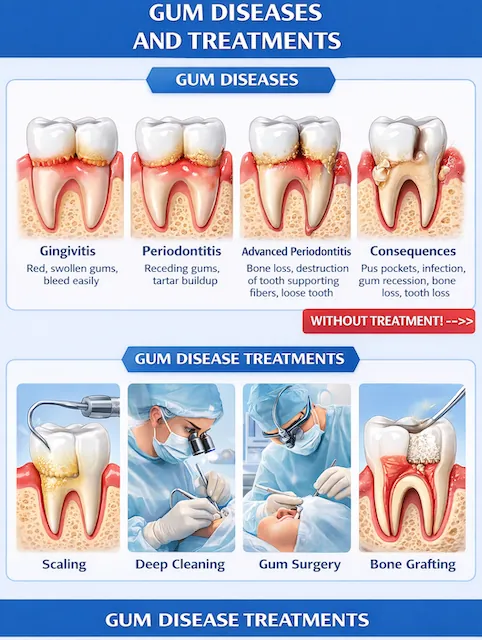
Disease Stages
Stage 1: Gingivitis
Red, swollen gums that bleed when brushing. Completely reversible.
Stage 2: Mild Periodontitis
Periodontal pockets form, bone begins to deteriorate. Requires specialized treatment.
Stage 3: Severe Periodontitis
Loose teeth, deep pockets, high risk of tooth loss.
Treatment Methods
- Ultrasonic Scaling: Removes plaque above and below gum line
- Root Planing: Deep cleaning of periodontal pockets
- Periodontal Surgery: For severe cases
Treatment Process at Lina
International standard medical procedure, ensuring maximum safety and effectiveness
Examination
General checkup and tooth condition assessment
X-ray
Periapical X-ray for detailed evaluation
Anesthesia
Local anesthesia for your comfort during the procedure
Treatment
Specialized endodontic or periodontal procedure
Follow-up
Check healing progress after 1-2 weeks
Maintenance
Oral hygiene advice and regular checkup schedule
Root canal treatment cost
| Item | Price |
|---|---|
| Root canal treatment, one root and one canal (incisors, lower premolars) | 1,400,000 VND/tooth |
| Root canal treatment, two roots (upper premolars) | 1,700,000 VND/tooth |
| Root canal treatment, upper or lower molar (3 or 4 canals) | 2,200,000 VND/tooth |
| Root canal re-treatment (added to the root canal treatment price) | +300,000 VND/canal |
| Composite filling | 800,000 VND/tooth |
Root canal prices do not include the filling. If the tooth needs a crown after treatment, the doctor tells you the cost first. Examination, consultation and periapical X-rays are free. See the full price list.
We accept cash, bank transfer, Visa, Mastercard, JCB, Alipay, WeChat Pay and USD. We do not offer instalment plans.
Risks and aftercare
The jaw may stay numb for a few hours after the anesthetic. The tooth may be sensitive or slightly swollen; this usually eases within a few days to 2 weeks. In some cases the area around the root tip does not heal fully, and you may then need re-treatment, apical surgery or an extraction.
A root-treated tooth breaks more easily if it is not restored in time. So:
- Avoid chewing hard food on the treated tooth until it has a filling or a crown
- Attend your follow-up visits on time
- Keep your mouth clean and have a check-up every 6 months
Alternatives to root canal treatment
If the tooth cannot be kept, the doctor will advise an extraction, followed by a dental implant or a porcelain bridge. The doctor always tries to keep the natural tooth when conditions allow.
Planning your treatment trip
Root canal treatment usually takes 2–3 appointments of 45–60 minutes each. The tooth then needs a filling or a crown, so plan time for this as well. Tell us your travel dates when you book, and the dentist confirms the schedule after the examination. The clinic supports your arrival, suggests accommodation nearby and provides all the documents you need for an insurance claim on request.
Frequently Asked Questions
Treatment is done under local anesthesia, so most patients feel only mild discomfort during the procedure. Once the anesthesia wears off, the tooth may feel tender for a few days; over-the-counter pain relief, taken as the dentist advises, usually helps.
Typically 2-3 appointments, each lasting 45-60 minutes depending on complexity. Front teeth usually require less time than molars due to fewer root canals.
Yes, follow-up is very important. The dentist will check healing progress, ensure no remaining infection, and evaluate treatment results.
A root-canal-treated tooth can last for many years when it is sealed with a filling or a crown as advised and kept clean. Some complex cases need retreatment; the dentist checks the tooth on an X-ray at follow-up visits.
Wait until anesthesia wears off (2-3 hours) before eating. Avoid hard, extremely hot/cold foods for the first 24 hours. After that, normal eating can resume.
Early stages (gingivitis) can be completely cured. Advanced stages can be controlled but bone loss cannot be reversed. Early treatment is essential.
Mild sensitivity may occur for a few days after scaling, especially if gum inflammation is severe. Using sensitivity toothpaste will quickly relieve symptoms.
Regular scaling every 6 months is recommended. People with rapid tartar buildup or periodontal disease may need cleaning every 3-4 months.
Early stages can be improved with good oral hygiene, but once periodontal pockets form, professional deep cleaning is necessary. Complete home treatment is not possible.
Costs depend on severity. Scaling and polishing: 500,000 VND – 700,000 VND. Treatment of deep gum pockets: 600,000 VND; gum surgery (gingivectomy): 1,000,000 VND – 1,800,000 VND. See the latest prices in our price list.
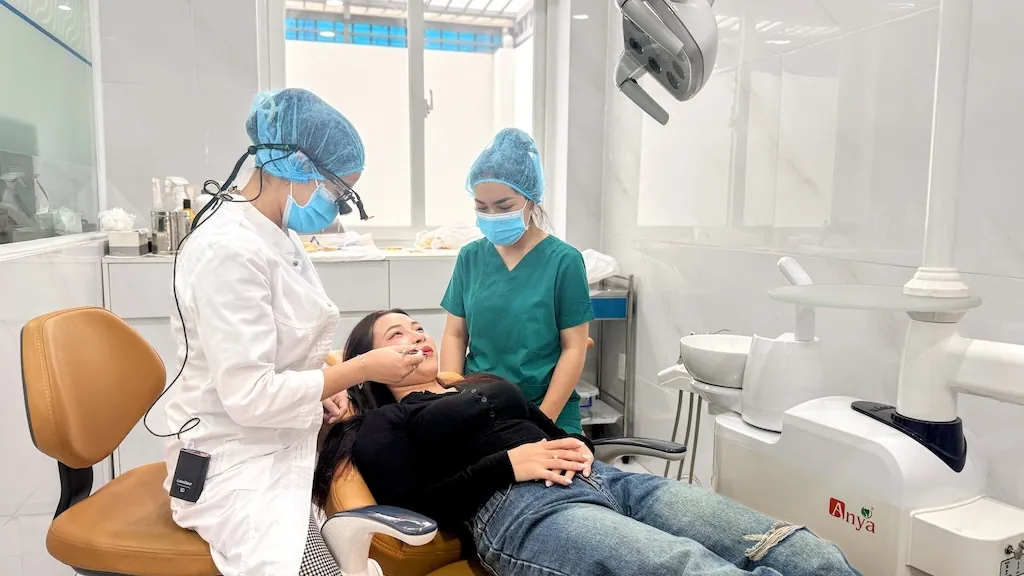
Medical Standard Procedure –
Gentle and Sterile
-
Modern Endodontic Machine: Helps clean and shape the root canals thoroughly and precisely.
-
On-site X-ray: Lets the dentist check each step and lowers the risk of a missed canal.
-
Strict Sterilization: Instruments are sterilized according to the procedures and standards issued by Vietnam's Ministry of Health, using modern equipment from Japan and Europe.
-
International Anesthesia: Modern techniques to keep you comfortable throughout the procedure.
"Delaying root canal treatment won't make the pain go away, it only increases the risk of losing the tooth. Let us help you."
— Dr. Lina Do