Oral Surgery & Wisdom Tooth Removal
Oral surgery and tooth extractions are minor surgical procedures aimed at removing harmful teeth and addressing jawbone pathologies. At Lina Dental Clinic, every procedure is performed by specialist oral surgeons using advanced imaging and sterile techniques — ensuring safety and minimal discomfort.
What Is Oral Surgery?
Oral surgery encompasses minor surgical procedures performed within the oral cavity. The most common is wisdom tooth (third molar) extraction — including impacted, partially erupted, or horizontally angled teeth — as well as treatment of severely damaged teeth that cannot be preserved.
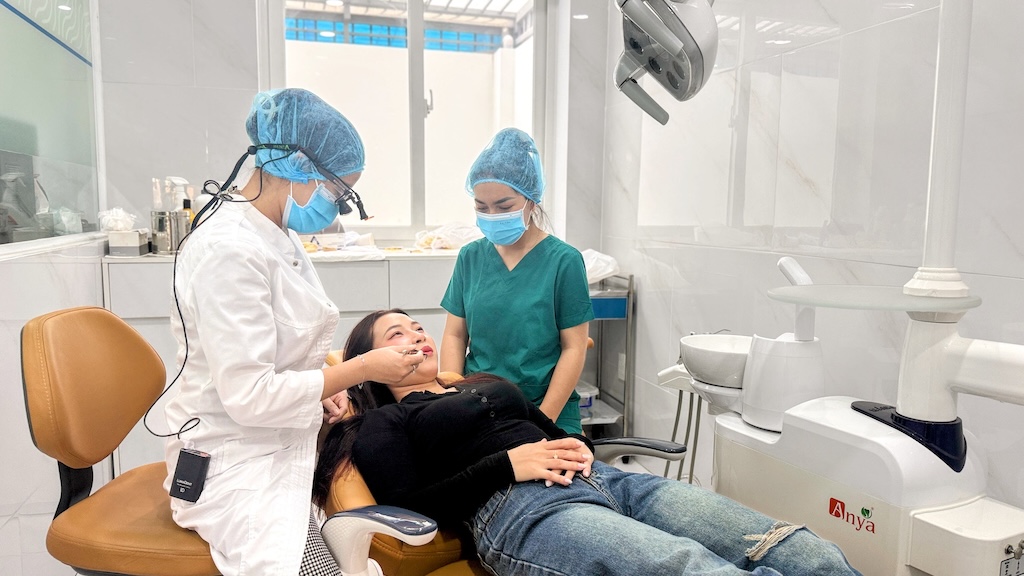
Procedures are performed chair-side under local anaesthesia — no hospitalisation required, with short procedure times and fast recovery. Diagnostic X-rays are taken before each procedure; complex cases may require a 3D CT scan to map the exact position relative to nerve pathways.
Simple Extractions
Fully erupted incisors, canines, and premolars
Surgical Wisdom Tooth Removal
Impacted or angled teeth requiring incision and sectioning
Soft Tissue Procedures
Gingivectomy, cyst removal, oral abscess drainage
Diagnostic Imaging
Standard X-ray; 3D CT indicated for complex cases
When Should a Tooth Be Extracted?
Impacted or Misaligned Wisdom Teeth
Angled wisdom teeth pressing on the second molar, causing pain and interproximal decay
Recurrent Pericoronitis
Repeated gum infections around the wisdom tooth affecting daily quality of life
Pre-Orthodontic Extraction
Removing wisdom teeth prior to braces treatment to create adequate arch space
Odontogenic Cysts & Jaw Pathology
Cysts developing from impacted wisdom teeth can destroy jawbone if left untreated
Non-Restorable Decayed Teeth
Severely broken-down teeth that cannot be saved by filling or crowning
Adjacent Bone Resorption
Impacted third molars causing progressive bone loss around the adjacent second molar
Advantages of Treatment at Lina Dental
Effective Pain Management
Precise local anaesthesia delivery, with pre-, intra-, and post-operative comfort monitoring. Procedures are performed in a clinically sterile surgical environment.
Advanced Diagnostic Imaging
Standard periapical and panoramic X-rays before each procedure. Complex impacted cases may be referred for 3D cone-beam CT to accurately map nerve anatomy.
Fast Recovery
Minimally invasive techniques, resorbable sutures, and post-operative guidance minimise swelling and discomfort. Most patients resume normal activities within 24–48 hours.
Experienced Dental Surgeons
Our team of experienced dental surgeons handles both routine extractions and complex surgical cases with confidence.
Our Safe Surgical Process
Examination & X-ray Imaging
The tooth and surrounding structures are examined and imaged. Impacted wisdom tooth cases may require a 3D CT scan to define the relationship with the inferior alveolar nerve.
Treatment Planning
The dentist explains the appropriate technique, the procedure steps, potential risks, and post-operative care instructions.
Local Anaesthesia
Local anaesthetic is administered at the correct dosage to ensure full comfort throughout the procedure. The dentist monitors and adjusts as needed.
Surgical Extraction
Incision, flap elevation, tooth sectioning if required, extraction, and closure with resorbable sutures.
Post-operative Instructions & Medication
A prescription of antibiotics and analgesics is provided, along with detailed wound care instructions and a follow-up appointment date.
Follow-up Review
Review appointment at 3–7 days to assess healing, remove sutures if needed, and confirm complete recovery.
Frequently Asked Questions
The extraction is performed under full local anaesthesia, so you will feel no pain during the procedure. After the anaesthetic wears off (approximately 3–4 hours), mild soreness is expected and managed effectively with prescribed pain medication.
Depending on complexity: a straightforward extraction takes around 30 minutes; surgical removal of an impacted tooth may take 1–2 hours. The dentist will provide a specific time estimate after examining your X-rays.
For the first 24 hours: no vigorous rinsing, avoid hard or hot foods, and do not smoke. Eat soft, cool foods. Take all prescribed medications. Avoid strenuous exercise and very hot showers.
The surface wound typically heals within 7–10 days. Complete jawbone recovery takes 3–6 weeks. Individual recovery varies depending on overall health and the complexity of the procedure.
Book a Free Consultation
Our specialist will examine your tooth and recommend the most appropriate treatment. Completely free and no obligation.