Root canal treatment has a bad reputation, and most of it comes from stories that are decades old. If a dentist in Ho Chi Minh City has told you that a tooth needs a root canal, you may be weighing whether to go ahead, wait until you are back home, or simply have the tooth pulled. This article looks at the most common root canal myths and what actually happens during and after treatment.
What a root canal actually is
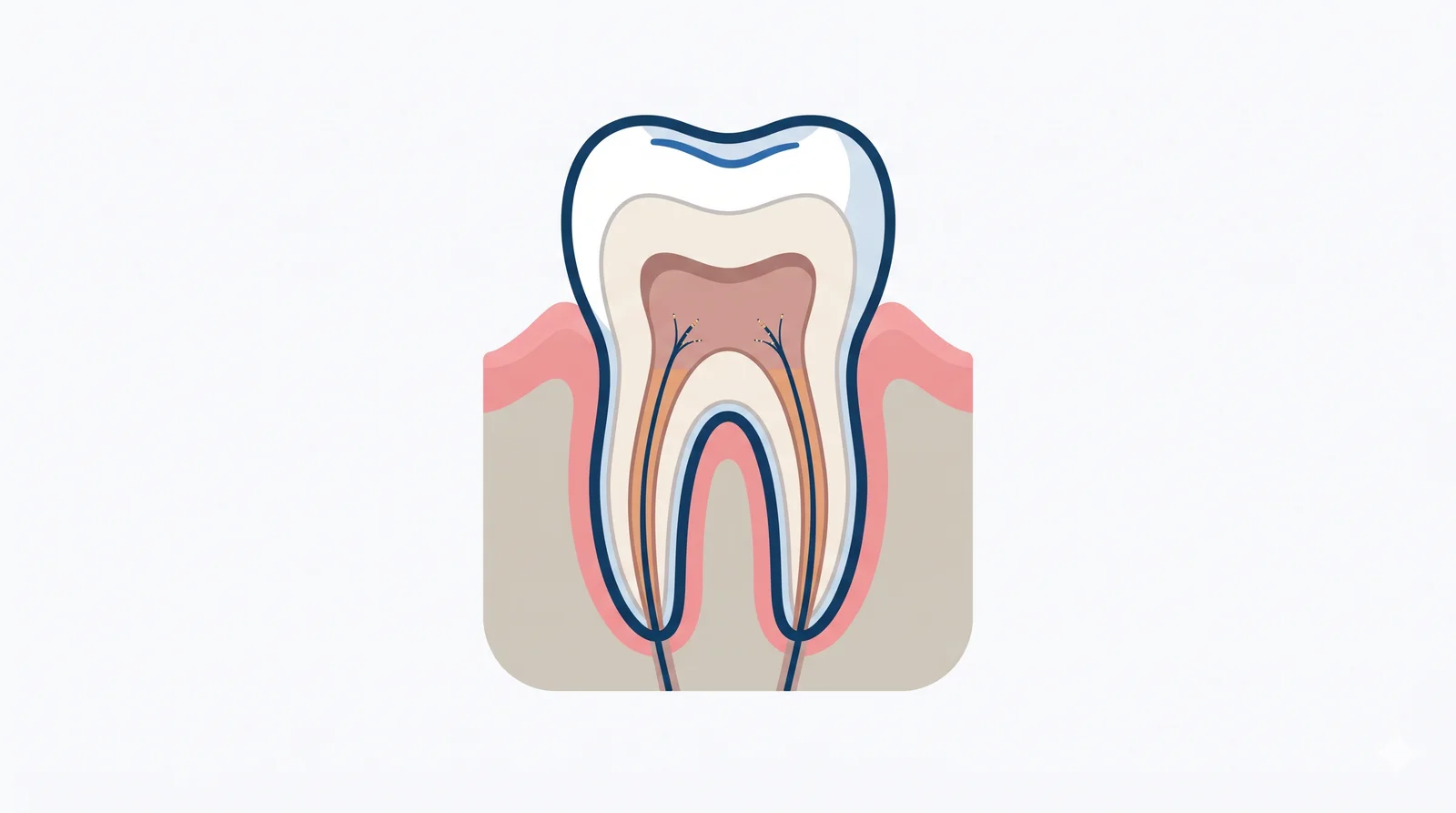
Inside each tooth is the pulp, a soft tissue with nerves and blood vessels. Deep decay, a crack or a knock to the tooth can let bacteria reach the pulp and cause inflammation or infection. Root canal treatment removes the inflamed or dead pulp, cleans and shapes the canals, and seals them so bacteria cannot return.
Typical warning signs include:
- Spontaneous toothache, often worse at night
- Lingering sensitivity to hot or cold
- A swollen gum or a small pimple near the root
- A tooth that has darkened
The dentist takes an X-ray to assess the damage. Complex cases may need a 3D CT scan. You can read more on our root canal treatment page.
Myth 1: Root canals are extremely painful
In most cases, the severe pain comes from the infected pulp itself. The treatment removes that cause.
During treatment
The procedure is performed under local anaesthesia for your comfort. Most patients feel pressure or vibration rather than sharp pain, and the main discomfort is keeping the mouth open. A very inflamed tooth can take longer to numb, so the dentist checks before starting and adds anaesthetic if needed. Raise your hand at any point if you feel something.
After treatment
The tooth may feel tender when biting for a few days, sometimes up to about two weeks, and this usually settles. Over-the-counter pain relief taken as the dentist advises is often enough. Increasing pain, spreading swelling or fever are reasons to come back promptly.
Myth 2: If the pain stops, the tooth has healed
When the pulp dies, the nerve may stop sending pain signals, but the infection is still there. Bacteria can spread to the root tip and cause an abscess, bone loss around the root and facial swelling. Waiting usually makes treatment more complex and lowers the chance of keeping the tooth.
Myth 3: Pulling the tooth is simpler and better
An extraction may be quicker on the day, but it leaves a gap. Neighbouring teeth can drift, the opposing tooth can over-erupt, and the jawbone in that area slowly shrinks. Replacing the tooth usually means a dental implant or a bridge, which adds time and cost.
At Lina, the doctor keeps the natural tooth whenever conditions allow. Extraction is advised when a tooth has a vertical root fracture, has lost too much supporting tissue, or cannot be restored after treatment.
Myth 4: A root-filled tooth is weak and will not last
A root-treated tooth no longer has living pulp, but the bone and ligament around the root still support it, so you can chew normally. It has often lost a lot of structure to decay, though, and breaks more easily if it is not restored in time.
A treated tooth can serve you for a long time when:
- It receives a filling or a crown as advised (back teeth that take heavy biting forces usually need a crown)
- You avoid chewing hard food on it until it is restored
- You keep good oral hygiene and attend check-ups every six months
How long it lasts depends on the starting condition of the tooth, the restoration and your care, so we do not promise a fixed number of years. In some cases the area around the root tip does not heal fully, and re-treatment, apical surgery or extraction may be needed.
Myth 5: Root canals make you ill
This idea goes back to the "focal infection" theory of the early 20th century, which blamed root-filled teeth for heart, joint and kidney disease. Later research did not support it, and the ADA describes root canal treatment as a routine way to save an infected tooth. Leaving an infection untreated is the bigger concern. If you have diabetes, a heart condition or take blood thinners, tell the dentist at your examination.
Myth 6: It takes weeks of appointments
Root canal treatment usually takes 2–3 appointments of about 45–60 minutes each, depending on complexity. A single-canal front tooth is usually quicker than a molar with three or four canals. The dentist confirms the schedule after the examination.
If you are visiting Vietnam or travelling for work, tell us your dates when you book. After the canals are sealed, the tooth still needs a filling or a crown, so plan time for that step too.
Root canal cost at Lina Dental Clinic
| Tooth type | Price |
|---|---|
| One root, one canal (incisors, lower premolars) | from 1,400,000 VND/tooth |
| Two roots (upper premolars) | from 1,700,000 VND/tooth |
| Upper or lower molar (3 or 4 canals) | from 2,200,000 VND/tooth |
| Re-treatment | plus 300,000 VND/canal |
Prices do not include the filling (composite filling from 800,000 VND/tooth). If the tooth needs a crown, the doctor gives you the cost first. Examination, consultation and X-rays are free. See the full root canal price list.
When to see a dentist soon
- Toothache lasting more than a few days or waking you at night
- Swollen gums, pus or facial swelling
- A previously root-filled tooth that hurts again when biting
- A temporary filling that falls out during treatment
Dr. Lina examines the tooth, takes an X-ray and explains the options before any treatment starts. You can book a root canal consultation.