Why wisdom teeth so often cause trouble
Wisdom teeth are the third molars, the last teeth to come in at the back of each jaw. According to the American Dental Association (ADA – MouthHealthy), they usually erupt between the ages of 17 and 21. By then the jaw has almost finished growing, and many people simply do not have room for one more molar.
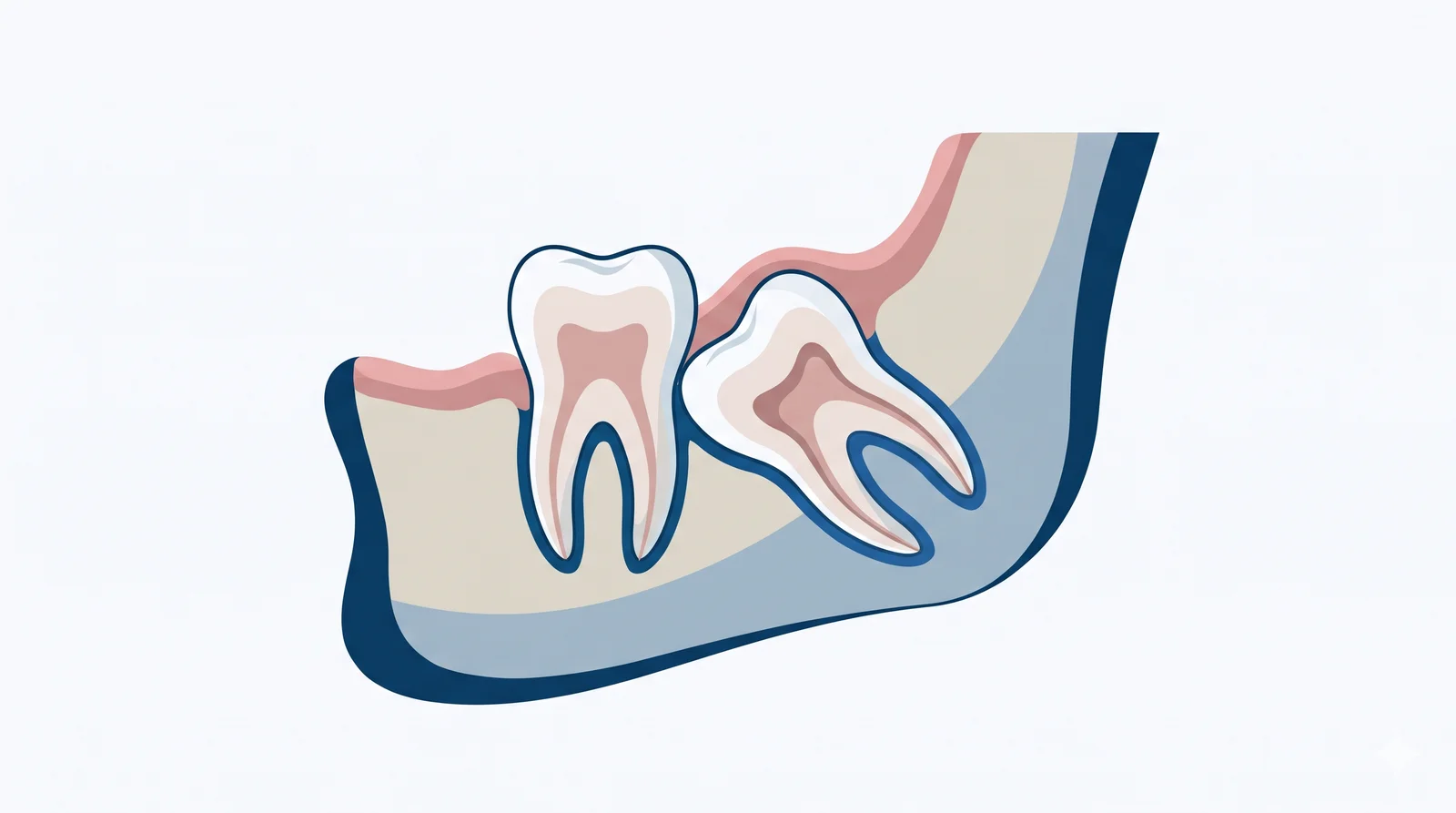
Without enough space, a wisdom tooth may:
- grow at an angle and press against the second molar;
- stay partly or fully impacted under the gum or in the bone;
- break through only partly, leaving a gum flap that traps food.
Not every wisdom tooth has to come out. A straight tooth with an opposing tooth to bite on, which you can clean and which causes no inflammation, may only need monitoring. So the useful question is not "should wisdom teeth always be removed?" but "is my wisdom tooth causing a problem, or likely to cause one?"
Signs it may be time to remove a wisdom tooth
These are the signs that most often lead a dentist to recommend removal. They match the situations the ADA lists as reasons to consider taking a wisdom tooth out.
Recurring pain at the back of the jaw
A dull ache or sharp pain near the angle of the jaw, sometimes spreading to the ear or temple. Pain that returns every few months usually means the tooth is causing trouble. Painkillers can mask it, but they do not treat the cause.
Swollen gum over the tooth (pericoronitis)
When a wisdom tooth is only partly through, the gum flap over it collects food and bacteria. The area swells, hurts when you chew and may cause bad breath or difficulty opening your mouth. Repeated pericoronitis is one of the most common reasons for removal.
Decay or bone loss on the neighbouring molar
An angled wisdom tooth leaning on the second molar creates a gap that is hard to clean. Over time the second molar can decay right at the contact point, or lose bone behind its root. The second molar does much of your chewing, so losing it costs far more than losing a wisdom tooth.
A badly decayed wisdom tooth
Wisdom teeth sit so far back that brushing them well is difficult. Once decay is deep, a filling or root canal treatment on a wisdom tooth is often hard to do and hard to maintain, so removal may be the more sensible option.
Swelling, a stiff jaw or fever
Infection that spreads can cause facial swelling, jaw stiffness, fever or swollen glands under the jaw. Do not wait this out. See a dentist promptly.
A cyst around an impacted tooth
Some impacted teeth form a cyst in the jawbone. It often causes no symptoms at first and shows up only on an X-ray. Left untreated, it can damage the roots of nearby teeth and the bone.
When monitoring is enough
Your wisdom tooth may only need regular check-ups if it:
- is upright, has enough room and meets an opposing tooth;
- can be brushed and flossed;
- shows no decay, no gum inflammation and no effect on the second molar.
The ADA notes that retained wisdom teeth still need to be monitored, because problems can develop later. Routine check-ups, with an X-ray when the dentist advises one, beat waiting until it hurts.
How the dentist decides
Pain alone is not enough to decide. The dentist needs to see where the tooth sits.
- Examination: the gum around the wisdom tooth, the second molar, your bite and how wide you can open.
- X-ray: shows the angle, how deep the tooth sits in the bone and the state of the neighbouring tooth. At Lina Dental Clinic the consultation and X-ray are free.
- 3D CT only when indicated: for a complex impacted lower tooth close to the nerve, the dentist may request a 3D CT scan. It is taken at a partner imaging centre, which charges for the scan.
- A clear plan: the dentist explains whether to remove or monitor, the steps, the risks and the aftercare, and you decide together.
Tell the dentist beforehand if you take blood thinners, or have heart disease, diabetes, a blood disorder or are pregnant. Do not stop any medication on your own.
What removal involves
The extraction is performed under local anaesthesia for your comfort. During the procedure most people feel pressure rather than pain. For an impacted tooth, the dentist may open the gum, section the tooth and close the site with dissolving stitches. It takes about 30 minutes to 2 hours depending on complexity; the dentist confirms the time after the examination.
Mild soreness and swelling after the anaesthetic wears off are normal. Risks to know about include dry socket, infection and, rarely, nerve injury causing numbness of the lower lip, chin or tongue. Smoking raises the risk of dry socket. Come back at once if pain gets worse after a few days, or if you have a fever, bleeding that will not stop or numbness that lasts.
More detail is on our oral surgery and wisdom tooth removal page.
Cost at Lina Dental Clinic
| Wisdom tooth type | Price |
|---|---|
| Upper wisdom tooth, straight | 2,500,000 VND/tooth |
| Lower wisdom tooth, straight | 2,500,000 VND/tooth |
| Wisdom tooth at a 45° angle | 3,000,000 VND/tooth |
| Wisdom tooth at a 90° angle | 3,500,000 VND/tooth |
The consultation and X-ray are free, and the dentist confirms which category applies after reading the X-ray. See the full oral surgery price list.
Planning around a visit to Ho Chi Minh City
If you are visiting or living in Ho Chi Minh City, plan to stay until the follow-up review, when the dentist checks healing and removes stitches if needed. The dentist gives you the review date after the extraction. Lina Dental Clinic is in Hiep Binh Ward, Ho Chi Minh City, and Dr. Lina Do speaks English. If you notice any of the signs above, book an examination early, while the problem is still simple to treat.