The short answer
Does a dental implant hurt? During the procedure, implants are placed under local anaesthesia for your comfort, so most patients feel pressure and vibration rather than sharp pain. Once the anaesthetic wears off, the area can feel sore and slightly swollen for a few days. How much varies with the person, the tooth position, bone quality and how complex the case is.
At Lina Dental Clinic in Ho Chi Minh City, Dr. Lina Do explains each step beforehand so you know what to expect. This guide covers before, during and after the procedure, and which symptoms are normal and which mean you should call us.
Before the procedure: examination and planning
The first visit is an examination, not surgery. The doctor reviews your medical history, checks your teeth and gums, and takes a standard X-ray to assess the site. Complex cases, such as limited bone or a site close to a nerve, may need a 3D CT scan. Consultation and X-ray at Lina are free.
Tell the doctor how anxious you feel. They will explain the anaesthesia plan, the expected time and how to prepare, for example eating lightly beforehand and listing the medication you take.
During the procedure: what you will feel
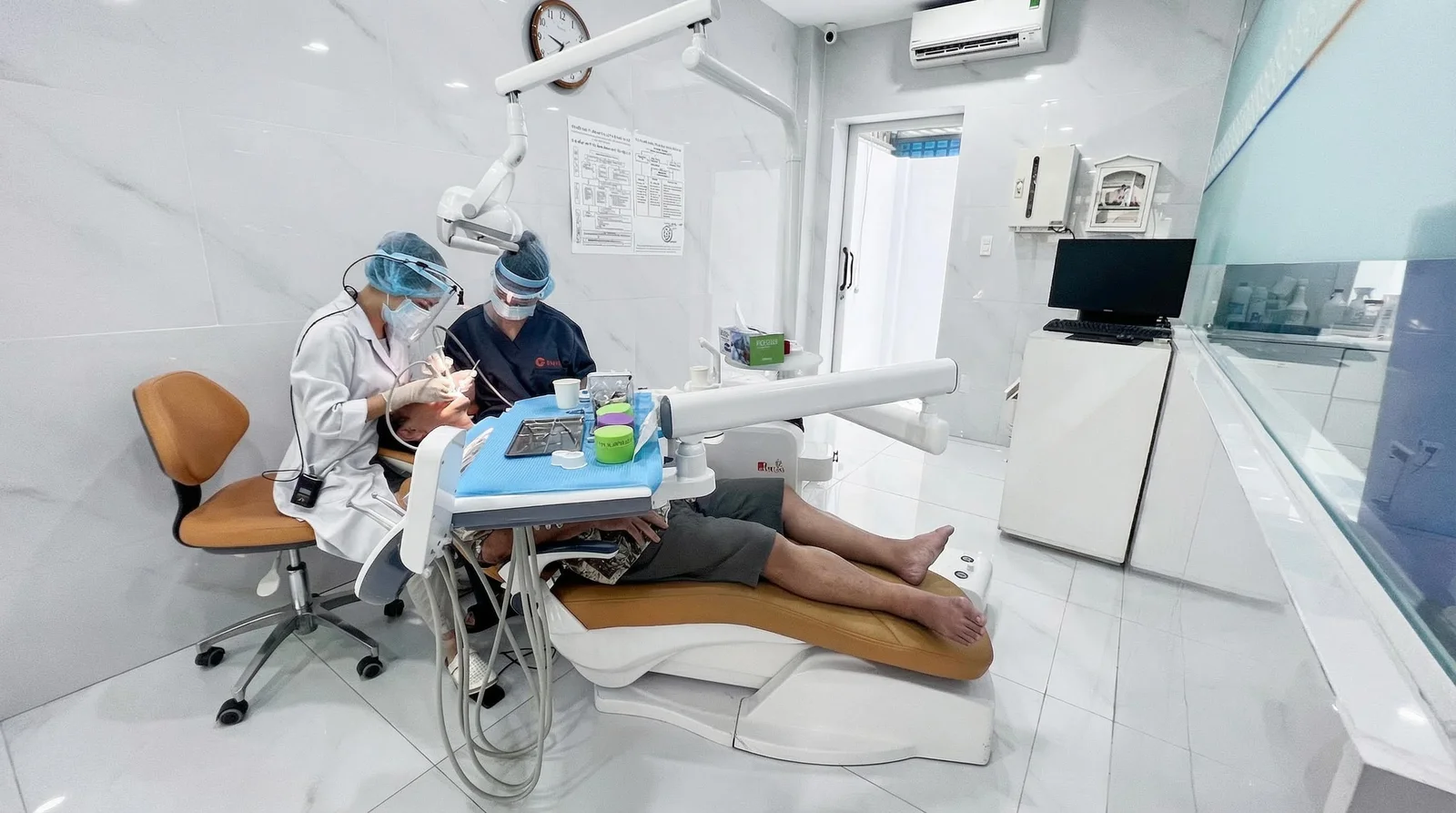
The doctor numbs the area with a local anaesthetic and waits until it takes effect before starting. You can still sense touch, pressure and the sound of the instruments, but you should not feel sharp pain. If anything is uncomfortable, say so and the doctor can add more anaesthetic.
Placing a single implant typically takes from about 30 minutes to over an hour, depending on the number of implants, bone quality and whether a bone graft is needed. The doctor confirms the time after the examination.
If you are very nervous, discuss options for feeling more at ease beforehand. This is decided by the doctor after assessing your general health.
The first days after surgery
Recovery is usually milder than people expect, but it is not zero. The table shows a typical course; it is a guide only, because every patient heals differently.
| When | What you may feel | What to do |
|---|---|---|
| First hours | Anaesthetic fades, area feels sore, lip numbness lessens | Bite on gauze as instructed, avoid hot food |
| Days 1–3 | Soreness, mild swelling, possible bruising on the cheek | Cold pack outside the cheek, soft food, medication as prescribed |
| Days 3–7 | Soreness eases, swelling goes down | Keep the area clean, rinse as advised |
| After 1–2 weeks | Usually settled; wound check | Attend your follow-up visit |
Pain relief and antibiotics, if needed, are prescribed by the doctor for your situation. Do not raise the dose or add other medication on your own.
How to prepare for your visit
A few days before the procedure, tell the doctor about all your medication and chronic conditions. On the day, brush your teeth well, do not arrive on an empty stomach and keep the rest of the day calm. If you smoke, cutting down beforehand helps the wound heal better. Bring any earlier X-rays you already have.
What can make it feel worse
Bone grafting or a sinus lift at the same visit, several implants placed together, smoking, poor oral hygiene, eating hard or hot food too early and touching the stitches all make recovery less comfortable. Conditions such as uncontrolled diabetes slow healing and raise infection risk.
Implant placement is surgery, so it carries the usual risks: infection, bleeding, an implant that does not integrate with the bone, and, rarely, nerve injury causing numbness. The doctor assesses your own risk before recommending treatment, and the American Dental Association stresses a thorough examination and regular follow-up (ADA MouthHealthy – Dental Implants).
Normal signs and signs to call about
Common and usually fine if they ease:
- Soreness around the site that fades over a few days.
- Mild swelling, cheek bruising and light oozing in the first 24 hours.
- Slight difficulty opening wide for a few days.
Contact the clinic promptly if you have:
- Pain that grows after day 3–4 instead of easing.
- Spreading swelling, heat, redness or fever.
- Bleeding that will not stop despite correct pressure on gauze.
- A bad taste or smell, pus, or an implant that feels loose.
- Lip or chin numbness that persists after the anaesthetic has worn off.
Who needs extra caution
The doctor will weigh up or postpone treatment if you have uncontrolled diabetes, smoke heavily, are receiving radiotherapy to the head or neck, take bisphosphonates for osteoporosis, have a blood disorder or take blood thinners, are pregnant, or are under 18. Please share your full history so the plan follows clinical standards. More about the process is on our dental implants page.
Cost and next steps
The cost depends on the implant system, the number of teeth and whether bone grafting is needed. Current prices are listed in the implant section of our price list. A final quote is given only after the examination.
If fear of pain is holding you back, book a consultation. You will be examined, have an X-ray free of charge, and can ask about anaesthesia and recovery before deciding. The doctor confirms timing and the plan after the examination.
Source: ADA MouthHealthy – Dental Implants.